
Case studies
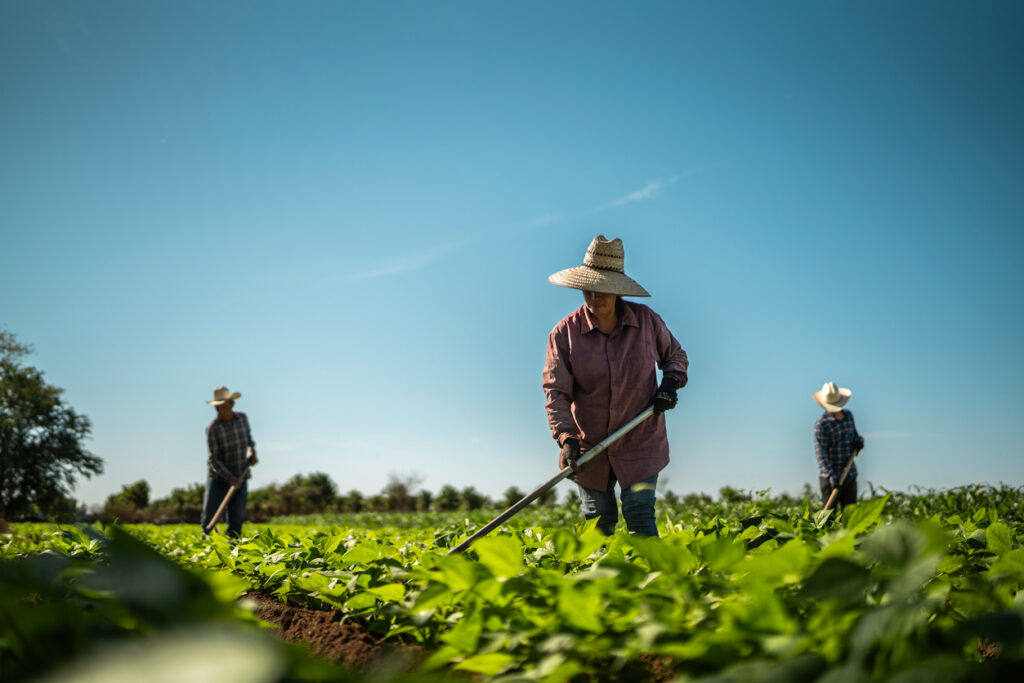
Putting agricultural innovation to work in Latin America: Three farmers on how they are building a more food-secure future
Scroll down ↓What does agricultural innovation look like on the ground? For three farmers in Brazil, Argentina, and Uruguay, it means finding new ways to produce food, protect natural resources, and adapt to changing climate.
Across Latin America, farmers are working with different soil types, climates, crops, and production systems. They are responding to changing weather patterns, pests, and diseases, while finding ways to use natural resources more efficiently, all while producing nutritious food.
While there is no single solution to these challenges, there is a common need. Farmers need access to a broad toolbox so that they can choose the approaches that work for their farms. In partnership with the Global Farmer Network®, we spoke to three farmers from Latin America about what innovation in farming looks like in practice.
Aline Vick
Putting soil health at the center
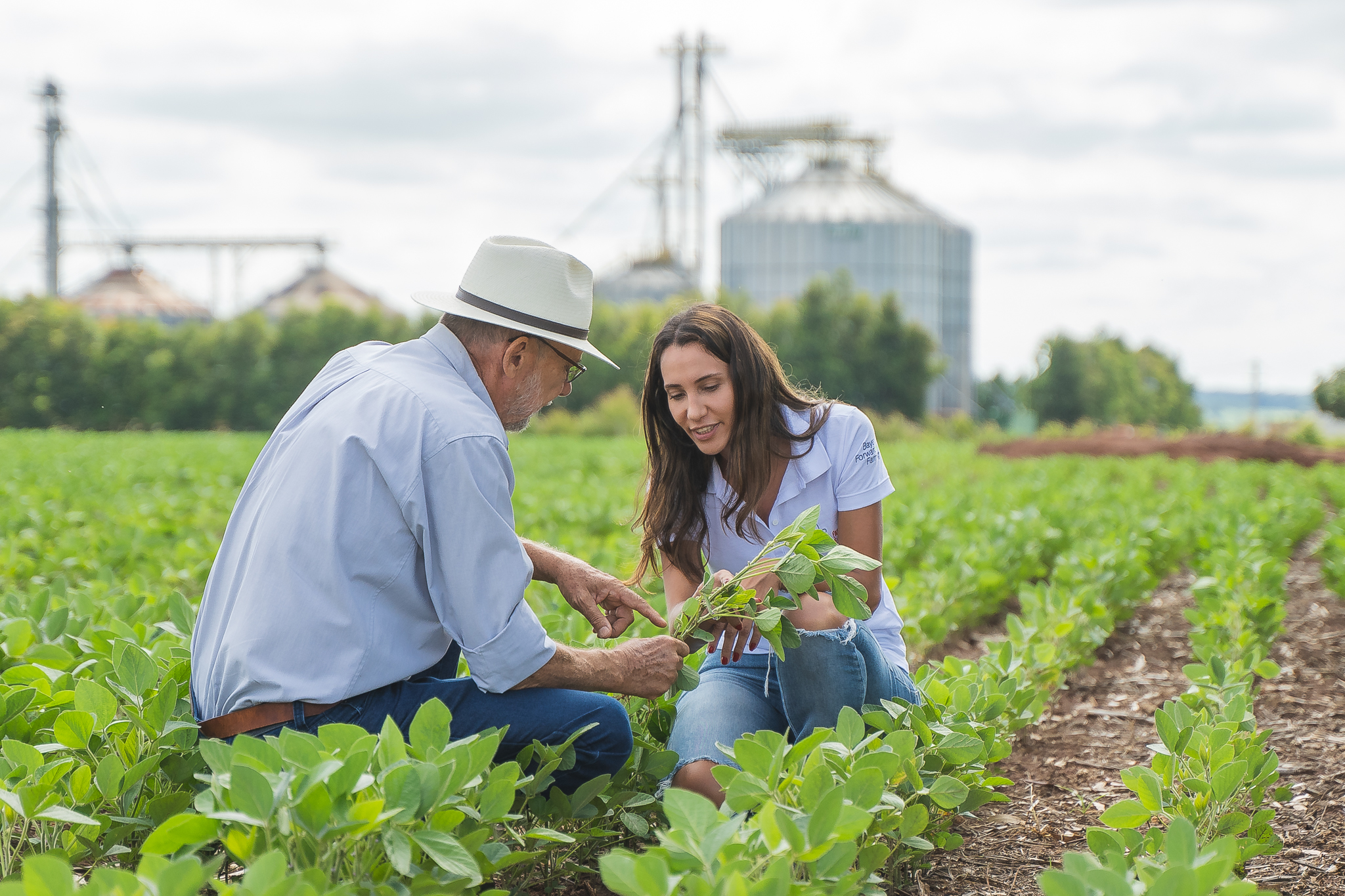
Aline Vick and her sister are second-generation farmers at Fazenda Estância in Pirassununga, São Paulo, Brazil. In their 1,200-hectare operation, Aline and her team produce soybeans, corn, sorghum, cassava, and sugarcane. In recent years, Aline’s operation has been transitioning toward regenerative agriculture, with one principle guiding farming decisions: soil health comes first.
One of the biggest changes has been diversifying the farm’s crop rotations. Each year, around 20% of the land is set aside for service crops. These crops are not grown for commercial harvest. Instead, they help feed the soil and naturally break the pest and disease cycles. In addition, keeping the soil covered helps reduce soil temperature, protect microbial life, and trap carbon.
Aline and her team have also introduced biological inputs alongside conventional ones. Before planting, seeds are paired with beneficial nitrogen-fixing bacteria, helping support crop growth while reducing fertilizer needs. For pest and disease management, biological and conventional products are combined, and modes of action are rotated.
For Aline, combining different approaches is key to managing resistance and ensuring crop protection tools continue to work effectively.
An essential part of the picture? Technology, including precision agriculture, is now part of the farm’s daily routine.
Autopilot systems help reduce unnecessary overlaps and optimize fuel use. Sensors, satellite imagery, algorithms, and farm management software help identify differences across the farm and target interventions more precisely. In one case, this allowed the farm to optimize product use by nearly 50% by treating only the areas that needed it, rather than an entire field.
The approach is also reflected in the farm’s carbon footprint. Fazenda Estância reports a soybean carbon footprint of 616.4 kg CO₂ per ton, compared with 1,526 kg CO₂ per ton for the Brazilian soybean average in the Ecoinvent database, a global resource providing standardized data on the environmental impacts of different products, services, and industrial processes. That is a difference of around 60%. For Aline, these results challenge the idea that farmers have to choose between productivity and sustainability.
“Feeding the world and restoring the land are not competing goals. It is possible to do both,”
Aline says.
But Aline also believes farmers cannot make this transition alone. Access to the right tools, supportive policies, investment, and informed consumers can all help farmers adopt and scale modern farming practices, in support of producers’ efforts to comply with environmental law and to actively invest in a more sustainable future.
Regenerative agriculture, she argues, is not a niche movement. Its relevance to food security lies in its scalability. Aline’s experience illustrates how agricultural innovation can help farmers combine productivity with resource conservation, while adapting solutions to the realities of tropical agriculture.
Emi Macor
Combining generations of knowledge with data

At 27, Emi Macor represents a new generation of farmers in Argentina.
A third-generation grain farmer and agronomist from southern Córdoba, Argentina, Emi Macor works with her family across approximately 450 hectares. They produce corn, soybeans, wheat, peanuts, and cover crops using a no-till production system.
For Emi, agricultural innovation is about combining what farmers already know with what science and technology can add.
Her family uses precision agriculture, soil analysis, continuous crop monitoring, satellite imagery, and integrated pest, disease, and weed management. Together, these tools help them make data-driven decisions throughout the season. They can identify changes in the field, optimize the use of inputs, and make decisions based on the specific conditions they are facing. In a region experiencing increasing climate variability, this can also help strengthen the farm’s resilience.
Emi is also a member of various farmers’ networks. These communities give her opportunities to exchange knowledge with other farmers, researchers, and agricultural professionals. For Emi, this collaboration is an essential part of agricultural progress, on which the future of agriculture depends.
“When decisions are guided by science, innovation, and practical farming experience, we can produce more food while caring for the natural resources that future generations will depend on.”
Emi Macor
For a third-generation farmer, that long-term perspective matters. The land is not simply a resource to be used today. It is part of a legacy to be passed on. Combining technology with knowledge and farmer-to-farmer learning can provide answers to adapt to rapidly changing conditions.
Gabriel Carballal
Protecting resources through no-till and precision agriculture
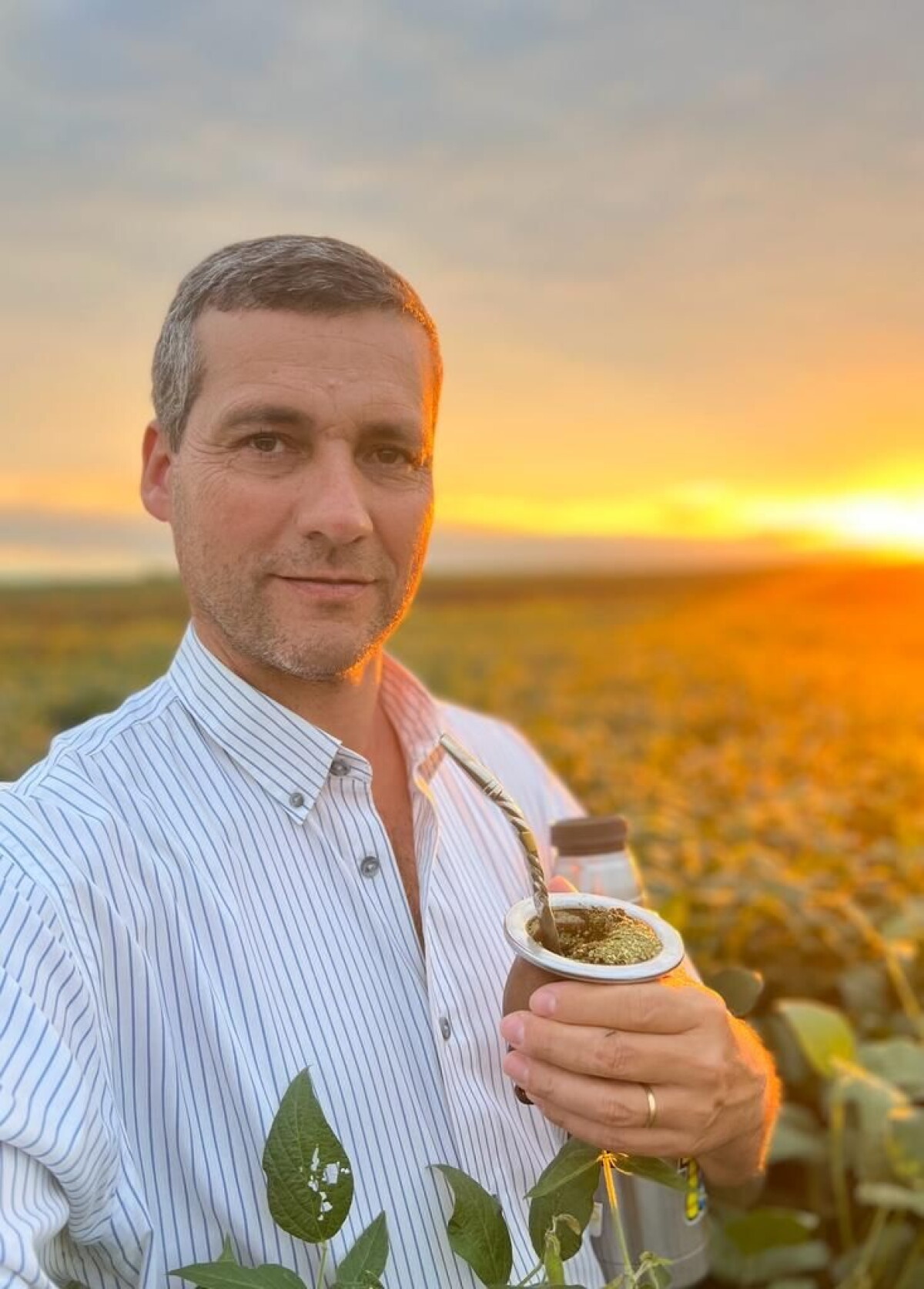
Gabriel Carballal is a third-generation farmer from southwest Uruguay. He started his own farming business in 2010, after working on his family’s farm since graduating.
Today, he operates across 2,400 rented hectares, with around 2,000 hectares under agriculture and 400 hectares dedicated to livestock. Gabriel is also a partner in two other agricultural businesses: one producing crops across 2,500 hectares, and another managing 350 hectares of lower-productivity land.
The farms he operates produce a diverse range of crops. Winter crops include rapeseed varieties such as canola, carinata (an oilseed crop related to mustard and canola), and camelina, alongside wheat, barley, oats, and ryegrass, while summer crops include soybean, corn, sunflower, and sorghum. Across this production system, one practice remains fundamental: no-till agriculture. For Gabriel, no-till transformed farming by helping reduce the soil erosion that was damaging agricultural land. Today, he sees it as an essential foundation for regenerative agriculture.
“Without this technology, we would be back to the 1980s, when erosion was destroying much of our soil,”
Gabriel says.
Precision agriculture has added another layer.
For Gabriel, crop data has revolutionized the way he approaches agricultural production. Data helps him understand variability across his fields and make more precise decisions about how to manage crops and resources. Combined with knowledge and experience, these tools help him protect and improve the resources his operations depend on, whether it is soil, water, or the wider environment.
Gabriel believes the benefits of innovation should also be communicated clearly by farmers. For him, farmers have a responsibility toward wider society to communicate how they produce food, and why they use particular technologies. At the same time, consumers and policymakers need to strive to understand agricultural production before drawing conclusions about the practices and tools used on farms. Too often, he argues, people see one part of the picture without understanding the conditions and decisions behind it.
Gabriel’s experience is a testimony of how technologies that transformed agriculture decades ago remain essential today, while new technologies add further precision.
Three farmers.
Three approaches.
One shared goal.
Aline, Emi, and Gabriel farm in three different countries of Latin America. They operate on different scales. They grow different crops. They face different weather conditions. They use different combinations of agricultural practices and technologies.
Yet, their experiences share a common thread. Agricultural innovation is not a single technology or a one-size-fits-all solution. It is the range of tools, knowledge, and practices that allow farmers to respond to the realities of their own land.
For one farmer, that might mean crop rotations and biological inputs. For another, no-till agriculture or precision farming. For another, a focus on satellite imagery and data-driven decision-making. As farming conditions change, having more options becomes increasingly important.
Farmers need the ability to select, combine, and adapt the tools that work for their crops, climate, and production systems.
Because food security depends not only on how much food we produce, but on whether farmers have the tools to keep producing it in the future. Across Latin America, these farmers are already putting innovation to work. The opportunity now is to make sure farmers everywhere can do the same.